
Standing proudly in the heart of Hanoi, the Hanoi Flag Tower is one of the city's most recognizable landmarks and one of the few original structures that survived the destruction of the ancient Imperial Citadel. More than just an architectural monument, it serves as a powerful symbol of resilience, independence, and national pride.
Located within the historic area of the Imperial Citadel of Thang Long, the Hanoi Flag Tower has witnessed centuries of political change, colonial rule, wars, and national reunification. Today, it remains one of the most meaningful attractions for travelers seeking to understand Vietnam's rich history and cultural heritage.
For guests staying at Juminium Homestay, the Flag Tower is within easy reach and can be combined with visits to several of Hanoi's most important landmarks, including Ba Dinh Square, the Ho Chi Minh Mausoleum, the Temple of Literature, and the Imperial Citadel of Thang Long.

1. A Brief Introduction to Hanoi Flag Tower
Known locally as "Ky Dai Hanoi," the Hanoi Flag Tower was constructed during the Nguyen Dynasty between 1805 and 1812 as part of the Hanoi Citadel. Built on the foundations of an earlier structure from the Le Dynasty, the tower originally functioned as a military observation post overlooking both the inner and outer sections of the city.

Today, the Flag Tower stands within the grounds of the Vietnam Military History Museum and remains one of Hanoi's most visited historical sites. Its strategic location and remarkable preservation make it a fascinating stop for both history enthusiasts and first-time visitors.
2. Historical Significance of Hanoi Flag Tower
Throughout its history, the Hanoi Flag Tower has played an important role in Vietnam's national story.
Unlike many structures within the citadel that were demolished during the French colonial period, the Flag Tower was preserved because of its value as a military observation point. During the wars of the twentieth century, it continued to serve military purposes and became a symbol of Hanoi's determination during difficult times.
One of its most memorable moments came after the August Revolution of 1945, when Vietnam's national flag was raised on the tower for the first time. The flag flew again following the victory over French colonial forces in 1954, marking a new chapter in the country's history.
For many Vietnamese people, the image of the red flag with a yellow star waving above the Hanoi Flag Tower represents freedom, independence, and national unity.
3. Architecture of Hanoi Flag Tower
The Hanoi Flag Tower stands approximately 33 meters tall, reaching about 44 meters when including the flagpole.
The structure consists of three square base levels and an octagonal tower that gradually narrows toward the top. Inside, a spiral staircase of 54 stone steps leads visitors to the observation platform.
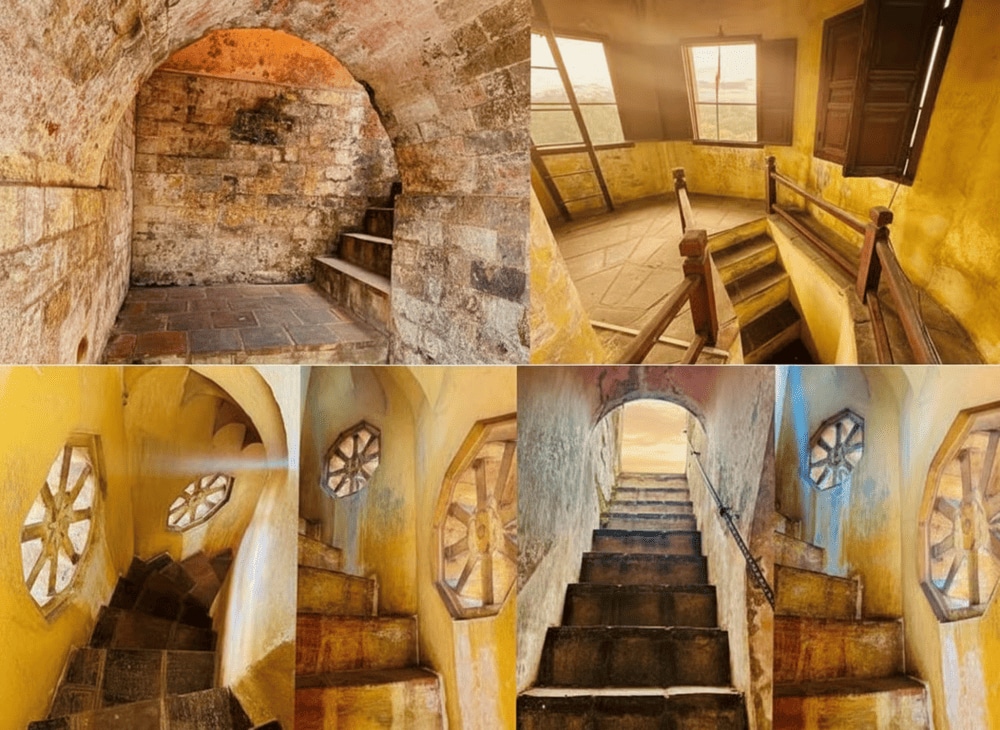
One of the tower's most distinctive features is its system of 39 ventilation openings shaped like fans, which help regulate airflow throughout the structure. At the summit, visitors can enjoy panoramic views across central Hanoi.
From the observation platform, you can see several of the city's most famous landmarks, including:
- The Imperial Citadel of Thang Long
- Ba Dinh Square
- Ho Chi Minh Mausoleum
- Hanoi Old Quarter
- Hoan Kiem Lake
- Historic government buildings and cultural sites
The combination of military functionality and elegant design makes the Hanoi Flag Tower one of the finest examples of nineteenth-century Vietnamese architecture.
4. How to Visit Hanoi Flag Tower
Today, Hanoi Flag Tower is located within the grounds of the Vietnam Military History Museum.
Opening Hours
- 8:00 AM – 5:00 PM daily
Entrance Fee
- Adults: approximately 20,000 VND per person
- Students and senior citizens are eligible for discounted admission according to current regulations
- Certain eligible visitors, including policy beneficiaries, may receive free admission
Please note: Opening hours and ticket prices may change over time. Visitors are advised to check the latest information before their visit.
5. Getting There
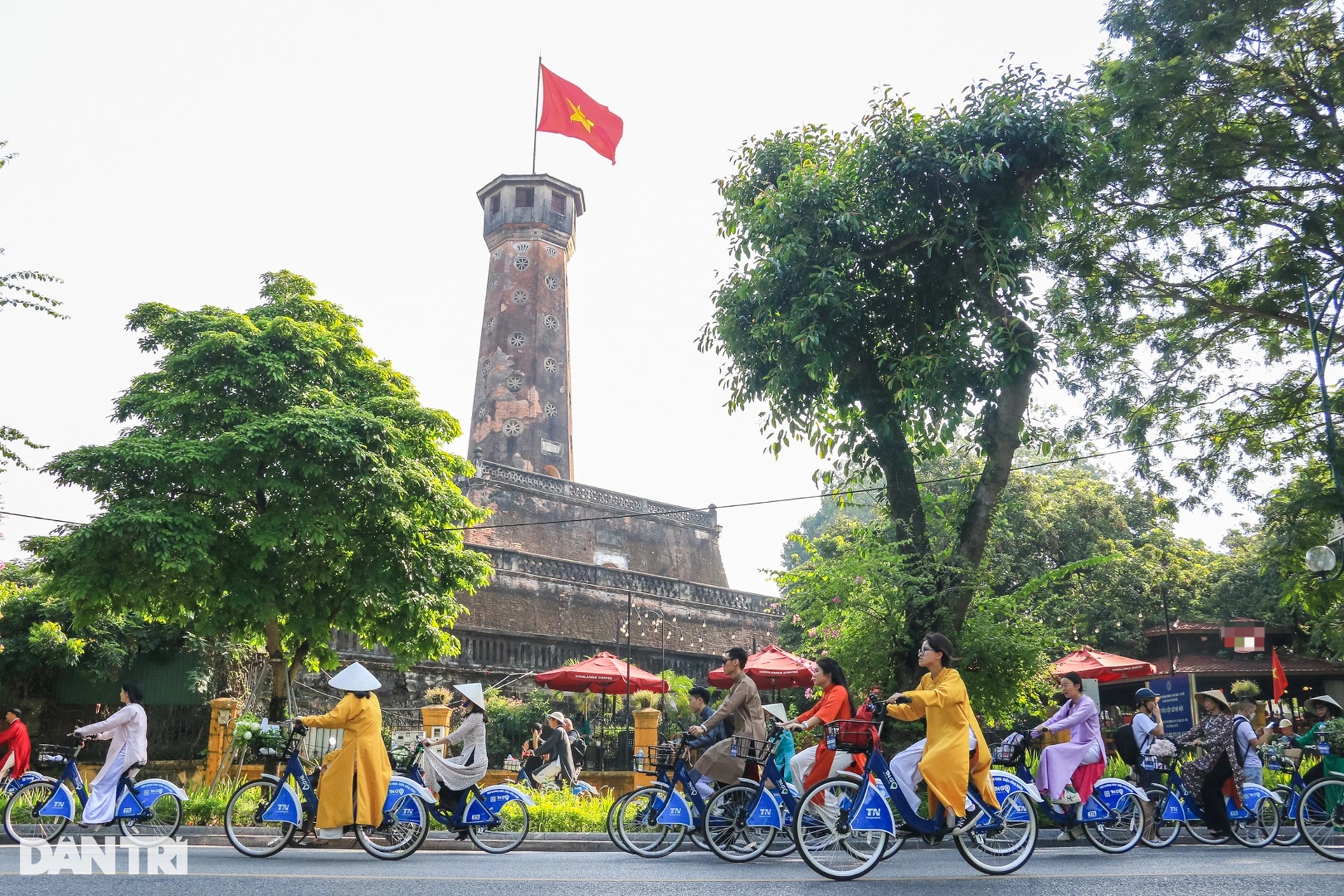
Hanoi Flag Tower is conveniently located in the heart of Ba Dinh District, one of Hanoi's most historic neighborhoods. Visitors can easily reach the site by:
- Walking from nearby attractions
- Taxi or ride-hailing services
- Public buses
- Bicycle or motorbike
Its central location makes it an ideal stop during a day of exploring Hanoi’s cultural and historical landmarks, including Ba Dinh Square, the Ho Chi Minh Mausoleum, the Imperial Citadel of Thang Long, and the Temple of Literature.
For travelers staying in the Ba Dinh area, including at Juminium Homestay on Dien Bien Phu Street, Hanoi Flag Tower is just a short walk away, making it easy to explore the city's rich heritage at your own pace.
6. Top Attractions Near Hanoi Flag Tower
One of the biggest advantages of visiting the Hanoi Flag Tower is its proximity to many of Hanoi's most important landmarks.
- Imperial Citadel of Thang Long: A UNESCO World Heritage Site that preserves over a thousand years of Vietnamese history and royal heritage.
- Ho Chi Minh Mausoleum: The final resting place of President Ho Chi Minh and one of Vietnam's most significant national monuments.
- Ba Dinh Square: The historic square where Vietnam's Declaration of Independence was proclaimed in 1945.
- Temple of Literature: Vietnam's first national university and one of the country's most treasured cultural landmarks.
- Vietnam Military History Museum: Home to an extensive collection of military artifacts, aircraft, tanks, and exhibits documenting Vietnam's military history.
7. Cafés and Restaurants Near Hanoi Flag Tower
After exploring the area, visitors can relax at several excellent cafés and restaurants nearby.

Popular options include:
- Cong Caphe – famous for its Vietnamese coconut coffee
- Highlands coffee - A Quick Coffee Stop
- Le Hanoi Gourmet – offering refined Vietnamese cuisine
- Ngon Villa – known for traditional Hanoi specialties
- Local cafés along Dien Bien Phu and Nguyen Thai Hoc streets
The neighborhood also offers numerous hidden cafés where visitors can enjoy a quieter side of Hanoi away from the crowds of the Old Quarter.
8. Where to Stay Near Hanoi Flag Tower
Choosing accommodation near Hanoi Flag Tower allows visitors to explore some of Hanoi’s most important historical landmarks on foot.
For travelers interested in culture, history, and authentic local experiences, Juminium Homestay is conveniently located just a 5-minute walk from Hanoi Flag Tower. Guests can also easily reach Ba Dinh Square, the Ho Chi Minh Mausoleum, the Imperial Citadel of Thang Long, and the Temple of Literature without relying heavily on transportation.
Unlike the busier tourist areas around the Old Quarter, the Ba Dinh district offers a quieter and more local atmosphere while remaining close to Hanoi’s most iconic attractions. This makes it an ideal base for families, groups of friends, and international travelers looking to experience a different side of the city.
Staying near Hanoi Flag Tower also means you can enjoy early morning walks through Hanoi’s historic district, visit major landmarks before the crowds arrive, and discover the rich heritage that makes Vietnam’s capital so unique.